Active movement
Elevation, rotation, scapular rhythm and painful arc.
 FR
FRShoulder pain · Geneva
Analysis of movement, strength, tendons and activity to distinguish modifiable limitations from presentations requiring medical review.
Rue de Fribourg 7 · 1201 Geneva
Shoulder pain may involve tendons, bursa, joint, scapular control or symptoms referred from the neck. Examination looks for coherence rather than one label.
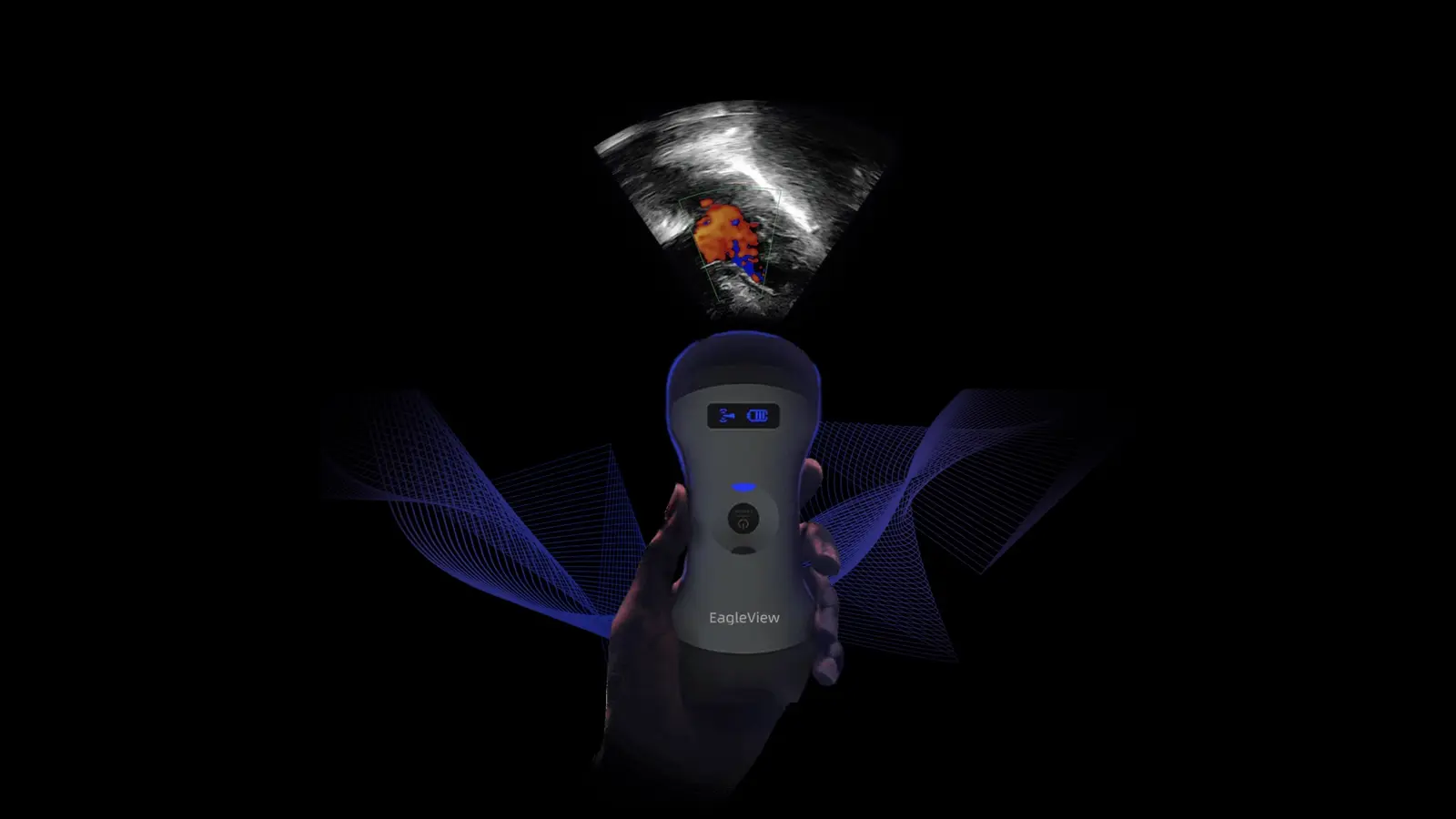
Ultrasound can complement assessment of selected superficial structures, but images are interpreted with strength, range, night pain and daily or sporting demands.
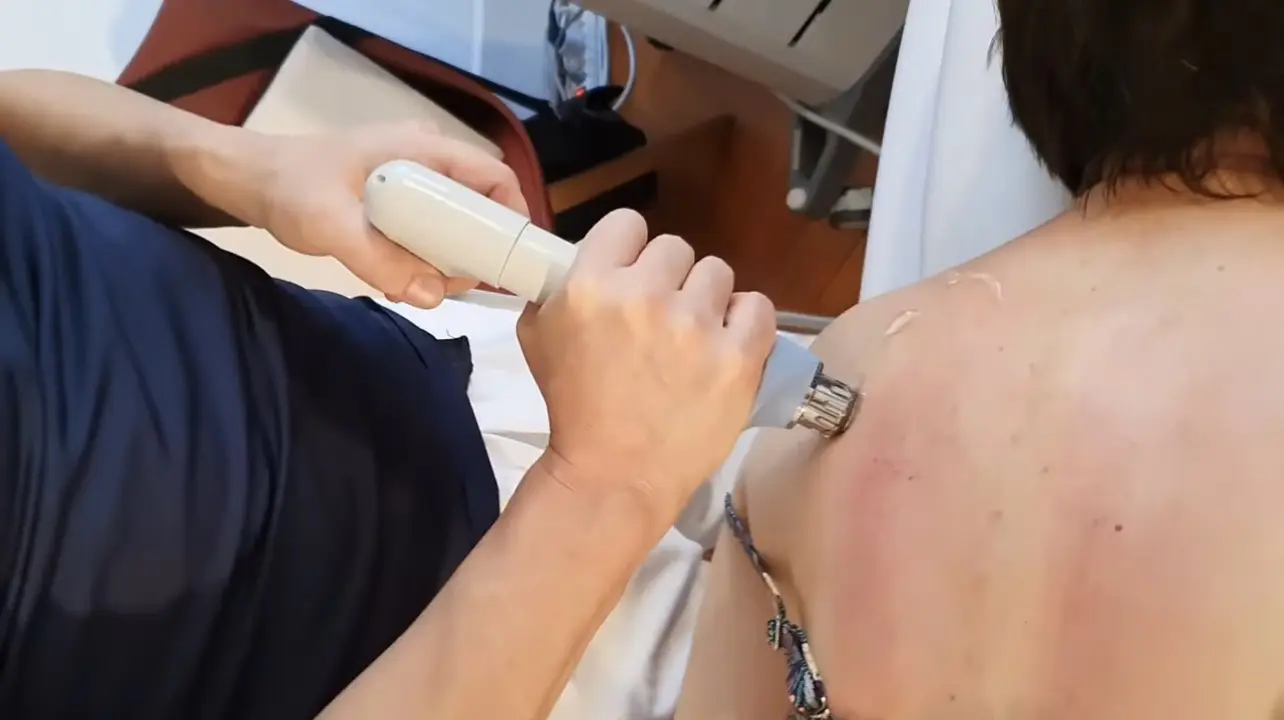
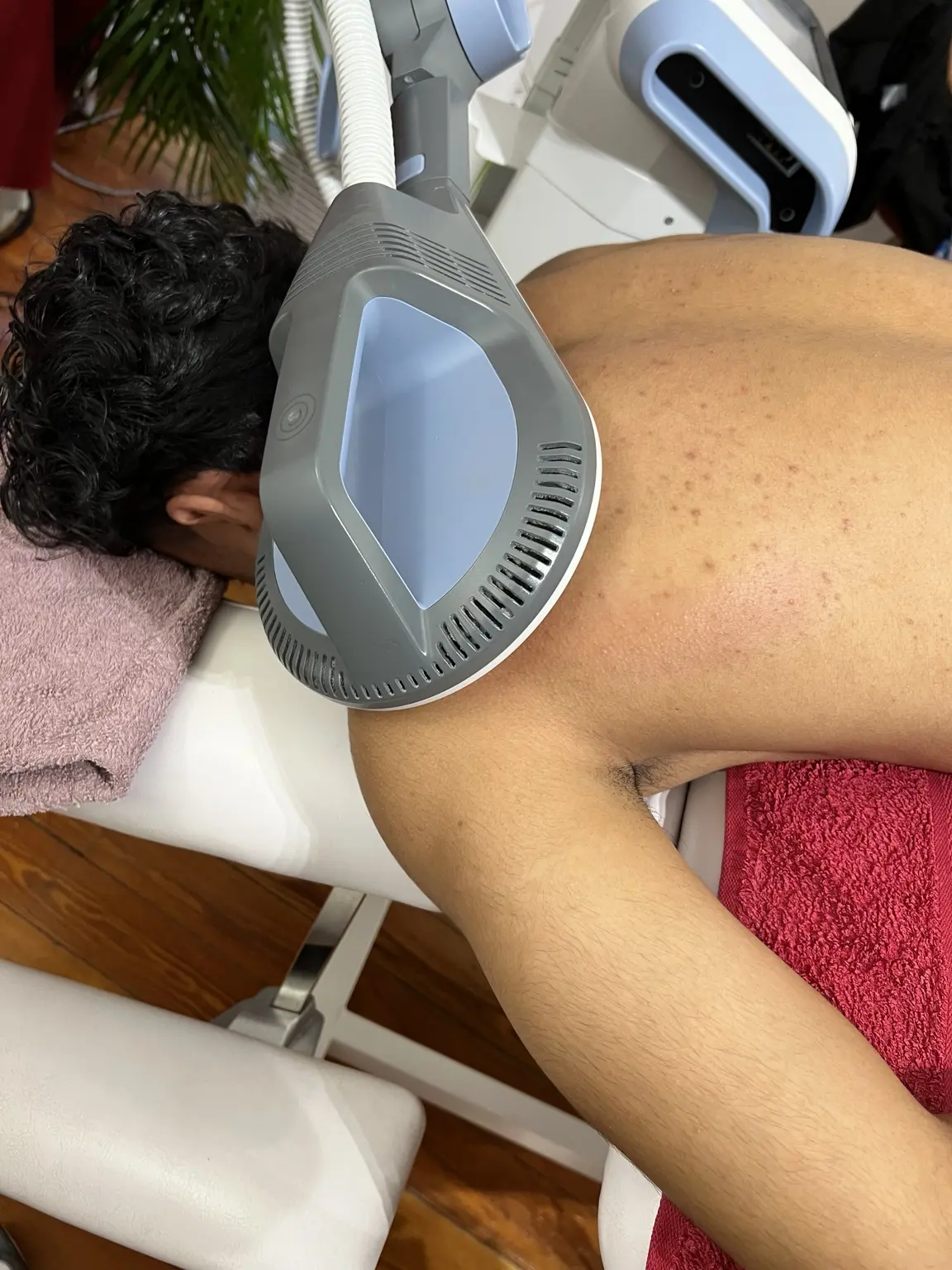
Care may combine load management, mobilisation, medical massage, exercise and selected technologies. Major traumatic pain or sudden loss of strength may require referral.
02 · IMG CLINICAL REASONING
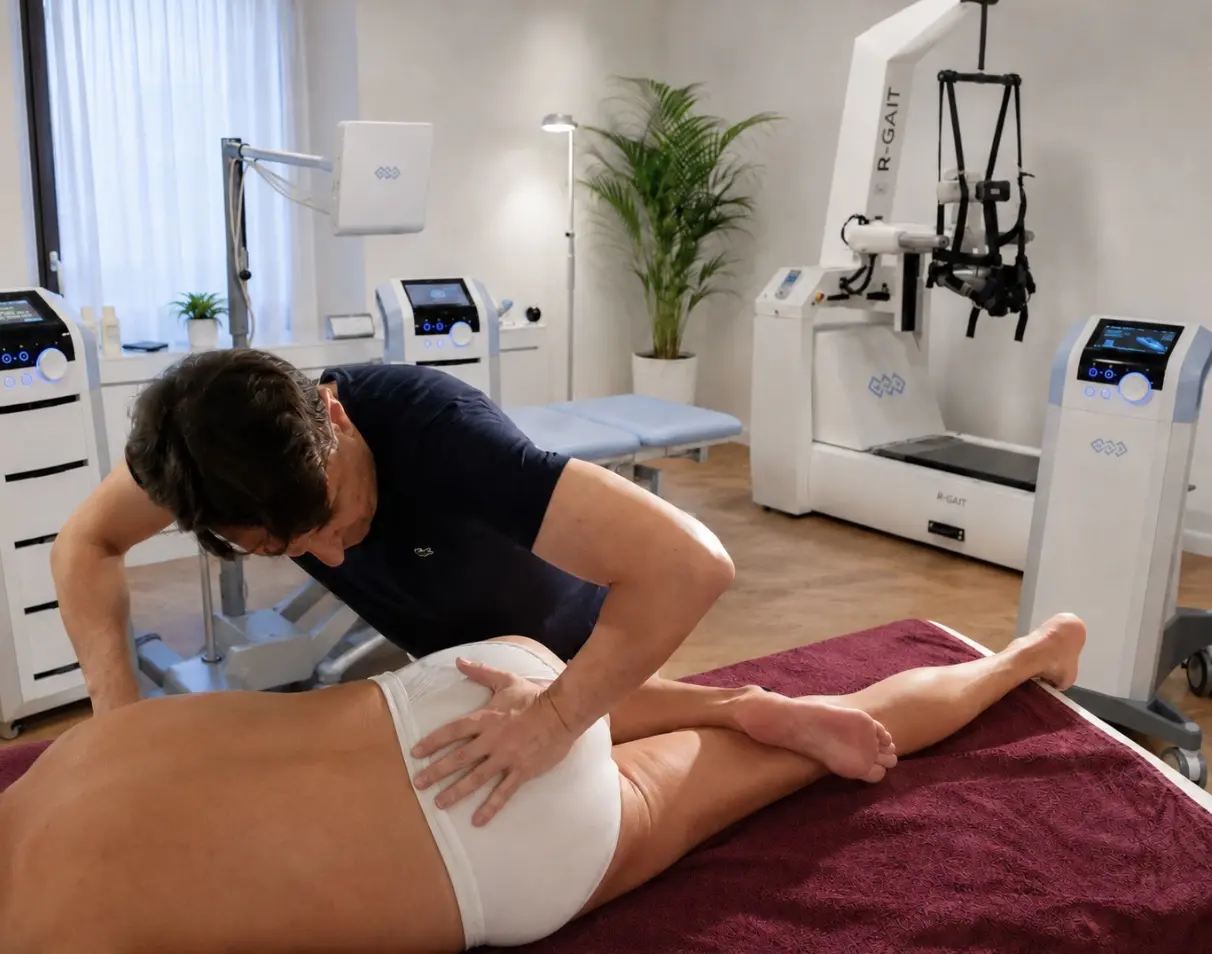
The neck, shoulder blade and arm are included when symptoms require it.
Elevation, rotation, scapular rhythm and painful arc.
Resisted tests adapted to pain level and suspected mechanism.
Palpation and dynamic ultrasound when they can clarify the question.
Trauma, night pain, global stiffness, sport, work and history.
03 · CLINICAL PATHWAY
The plan follows phase and goal, not only the named structure.
Reduce irritation without unnecessary immobilisation.
Develop useful and tolerable range.
Progress the cuff, scapula and functional chain.
Reintroduce work tasks, sleep positions and sport.
04 · INDICATIONS
05 · FAQ
It can complement examination of selected tendons, bursae and superficial tissues when there is a defined clinical question.
Not always. Load is often modified rather than removed, according to pain and safety.
Not necessarily. Relevance depends on examination, phase and other findings.
No. It is discussed for selected presentations after assessment and screening.
06 · EXPLORE
Continue with the topics most directly connected to this assessment.
Your next step
Contact IMG Clinic directly or complete the Clinical Pathway Engine™ beta to prepare an initial clinician-reviewed pathway.